Why Reinforced Concrete Design Is Still the Backbone of Modern Civil Engineering
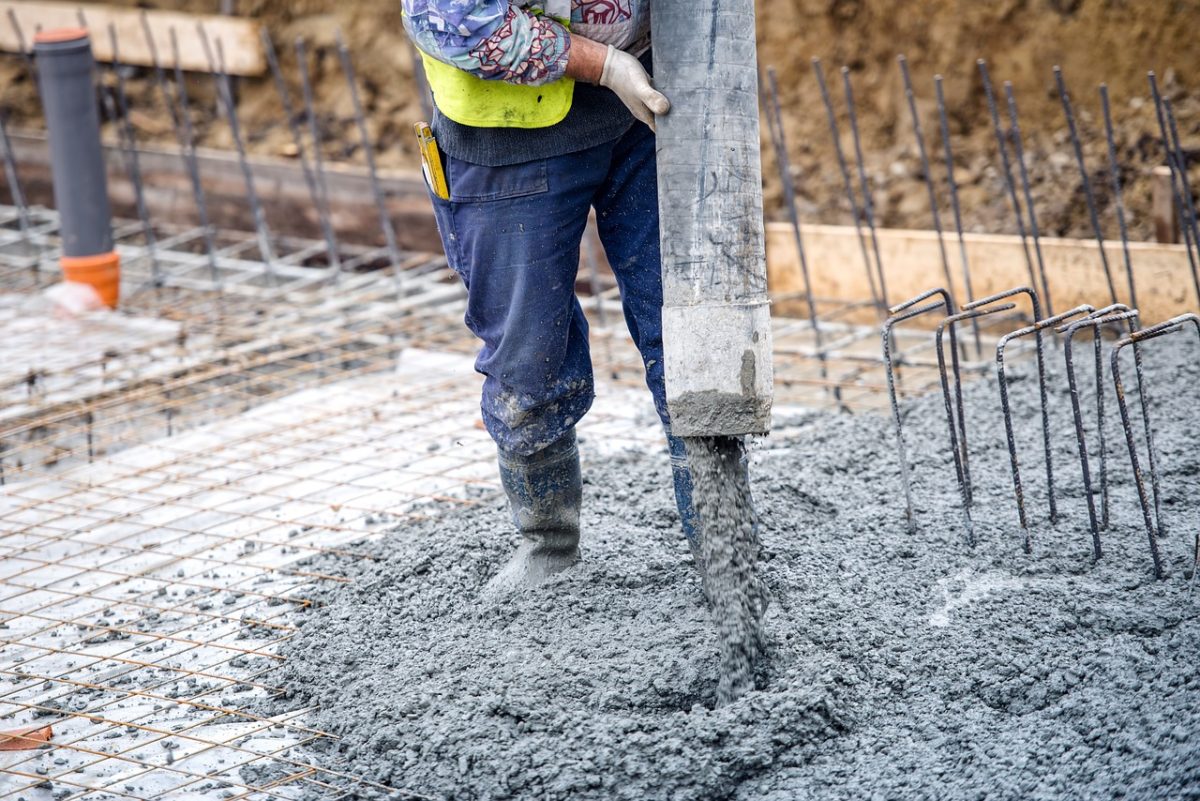
Concrete is one of humanity’s oldest building materials — used in ancient Rome, Mesopotamia, and early civilizations. But what transformed concrete from an ancient invention into the core of modern infrastructure was the introduction of reinforcement. By combining concrete with steel, engineers created a composite material capable of resisting the full range of forces acting on a structure.
Reinforced concrete is not just “modernized concrete.”
It is what made skyscrapers possible, bridges longer, foundations stronger, and infrastructure more resilient.
Concrete is ancient. Reinforcement is what made it modern.
Concrete alone is incredibly strong under compression — the type of force that squeezes or crushes. But it is naturally weak in tension — the type of force that pulls, stretches, or bends.
Steel reinforcement changed everything.
Steel and concrete work opposite each other:
-
Concrete → strong in compression
-
Steel → strong in tension
When combined, they act together as a single engineered material. The concrete resists compressive loads, while the steel absorbs tensile and bending stresses. The result is a structural system that can handle:
-
vertical loads
-
horizontal loads
-
bending
-
shear
-
twisting
-
dynamic or impact forces
This synergy is why reinforced concrete is used in nearly every major civil structure on Earth.
Concrete is not just “pour it and let it dry.”
Reinforced concrete design is highly technical. Every step — from the steel layout to the concrete mix itself — has engineering behind it.
Engineered reinforced concrete involves:
• rebar sizing – selecting the diameter and grade of steel needed to handle the structural forces
• spacing – determining how closely rebars are placed to distribute loads and prevent cracking
• cover depth – ensuring enough concrete covers the reinforcement to prevent corrosion
• load calculations – analyzing dead loads, live loads, seismic forces, wind, soil pressure, and more
• mix design – specifying cement content, aggregates, admixtures, slump, and strength requirements
• curing conditions – controlling temperature and moisture so the concrete reaches its intended strength
Every beam, column, slab, and footing is the result of these calculations. Nothing is arbitrary.
Reinforced concrete = longevity
When reinforced concrete is designed and constructed correctly, it performs for decades — often centuries. It offers:
-
high durability
-
fire resistance
-
low maintenance
-
resistance to weather, corrosion, and chemical attack
-
structural redundancy and robustness
This longevity is why reinforced concrete remains the backbone of:
-
highways
-
bridges
-
retaining walls
-
high-rise buildings
-
water treatment plants
-
dams
-
tunnels
-
utility structures
Civil engineering relies on materials that are predictable and stable over long time spans. Reinforced concrete delivers exactly that.
That is why even in an era of composites, laminated timbers, and modular steel — civil engineering still leans on reinforced concrete.
Modern materials are exciting, but none yet match reinforced concrete’s combination of versatility, performance, cost-effectiveness, and global availability.
Reinforced concrete remains dominant because it is:
-
proven — centuries of performance data
-
predictable — well-understood behavior under all types of loads
-
reliable — strong even in harsh environmental conditions
-
durable — capable of outlasting the structures it supports
Civil engineers design with confidence when using reinforced concrete, because its performance is known, tested, and consistent.
Reinforced concrete isn’t “old.”
It’s foundational — and still unmatched in many of the world’s most important structures.