Artificial Intelligence and the Future of Manufacturing
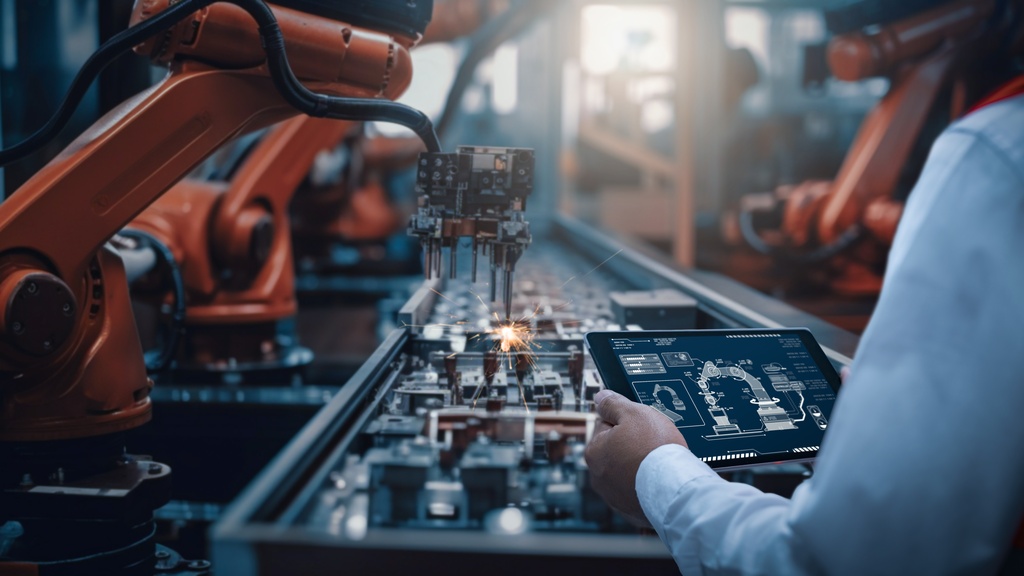
Manufacturing is undergoing a technological revolution with artificial intelligence transforming operations, production, and supply chains. This shift goes beyond system upgrades, fundamentally changing industrial production.
AI applications like predictive maintenance and advanced quality control are reshaping manufacturing processes, preventing costly breakdowns, and ensuring defect-free products. In this blog post, we’ll take a closer look at artificial intelligence, its current applications, benefits, and future in manufacturing.
Current Applications of AI in Manufacturing
Manufacturing companies are already deploying AI technologies across their operations with remarkable results. These applications demonstrate how artificial intelligence moves beyond theoretical concepts to deliver tangible improvements in real-world production environments.
Predictive Maintenance Transforms Equipment Management
Traditional maintenance schedules can cause unnecessary downtime or unexpected failures. AI-powered predictive maintenance solves this by analyzing sensor data, vibration patterns, and temperature readings to forecast when machines need attention. Smart sensors monitor equipment health and use machine learning to detect subtle issues, predicting problems like bearing failures or belt wear weeks in advance.
By adopting predictive maintenance, companies can cut unplanned downtime in half and extend equipment lifespan. This AI technology prevents breakdowns, optimizes schedules, and improves efficiency.
Quality Control Reaches New Standards
AI-driven quality control systems use computer vision and machine learning to inspect products with precision beyond human ability. These systems analyze thousands of items per minute, detecting defects like scratches, color variations, or dimensional inconsistencies. By ensuring consistent quality, they maintain seamless production performance.
Trained on datasets of acceptable and defective products, AI models spot subtle variations that signal potential issues. Advanced systems adapt to new products and defect types without extensive reprogramming, learning continuously to improve accuracy and reduce errors, boosting production line efficiency.
Supply Chain Optimization Drives Efficiency
AI optimizes supply chains by analyzing data from suppliers, transportation networks, weather, and market trends. It predicts demand fluctuations, identifies disruptions, and makes smart decisions to maintain efficiency. Machine learning forecasts demand accurately, factoring in seasonal changes, promotions, and consumer behavior. This helps manufacturers maintain optimal inventory levels and avoid stockouts.
AI also streamlines logistics by identifying alternative suppliers, optimizing shipping routes, and predicting delays. When disruptions occur, these systems make quick adjustments to keep production on track, ensuring a more resilient and efficient supply chain.
Benefits of AI in Manufacturing
The integration of artificial intelligence delivers measurable improvements across multiple aspects of manufacturing operations. These benefits extend beyond simple automation to create more intelligent, responsive, and efficient production systems.
Efficiency and Productivity
AI systems boost production efficiency by optimizing schedules, equipment use, and workflows to maximize output while reducing resource consumption. Smart algorithms use real-time data to identify bottlenecks and recommend adjustments, ensuring smooth operations and higher output. Automated systems run continuously without fatigue, handling repetitive tasks with speed and precision beyond human capabilities.
Reduce Operation Costs
AI reduces manufacturing costs through predictive maintenance, optimized schedules, and better quality control. Predictive maintenance avoids costly repairs and lowers spare parts inventory, while improved schedules cut energy use and material waste. Enhanced quality control reduces defects and warranty claims, and supply chain optimization minimizes transport and inventory costs, delivering significant financial benefits.
AI energy systems also save costs by analyzing usage patterns and adjusting operations to reduce utilities. They shift non-critical tasks during peak demand periods, lowering energy expenses while meeting production targets, making AI a smart investment for manufacturers.
Improve Quality
AI ensures consistent quality standards that are hard for humans to maintain over time. Machine learning analyzes production data to spot quality issues early, enabling proactive adjustments. Automated inspection systems perform precise, uniform product checks, eliminating human variability and catching defects that protect brand reputation and reduce warranty costs.
Real-time process control algorithms monitor production parameters and make micro-adjustments to maintain optimal conditions. This ensures products meet specifications, even as materials or equipment change, increasing reliability and efficiency throughout production.
Challenges and Considerations
While AI promises many advantages for manufacturers, that doesn’t mean there aren’t also challenges. AI implementation requires significant investment, and the handling of sensitive data by artificial intelligence is also a serious concern.
Initial Investment and Implementation
Deploying AI systems requires significant upfront investment in hardware, software, and infrastructure upgrades. Retrofitting old manufacturing equipment with sensors, training staff, and hiring AI specialists all add to the costs. Companies also need strong data management systems to handle the large amounts of information AI generates and processes.
Despite these challenges, careful planning can yield positive returns within two to three years. A phased implementation approach can spread costs over time and deliver incremental benefits to fund further upgrades.
Data Security and Privacy
Manufacturing AI systems handle sensitive data on production, quality, and operations, making cybersecurity essential. Companies should use encrypted data transmission, secure storage, and strict access controls to protect information. Regular security audits and updates are key to staying ahead of cyber threats.
Clear data governance policies help balance privacy concerns with the need for AI to operate effectively. Guidelines for data collection, storage, and usage maintain trust while allowing AI to improve performance and efficiency.
Future Trends in AI and Manufacturing
We know how artificial intelligence is benefiting the manufacturing sector today, but what about the future? Combining AI with other advanced computer technologies, like the Internet of Things (IoT), cloud computing, and robotics, promises even more rewards for manufacturers.
Integration With IoT and Cloud Computing
The combination of AI, IoT devices, and cloud computing is revolutionizing manufacturing. IoT sensors provide data for AI algorithms, while cloud platforms offer the processing power and storage for analysis. Edge computing enhances this by enabling real-time decisions through local AI processing, reducing delays and improving efficiency.
The future of industrial laser marking, which is a key aspect of traceability and compliance in manufacturing, revolves around integrating equipment with Industry 4.0 and IoT. This integration means real-time tracking, data-driven insights, and greater productivity.
Advancements in Robotics and Automation
Next-generation industrial robots now use AI to adapt to changing conditions and learn from experience, enabling them to handle complex tasks. These robots work safely alongside humans, using AI vision systems to identify objects, assess quality, and decide handling procedures. Their flexibility allows a single robot to perform multiple tasks, reducing the need for specialized equipment.
Enhanced Decision-Making and Customization
AI is transforming manufacturing with decision-support tools that analyze scenarios and recommend strategies. These tools factor in market conditions, resources, and operational constraints, enabling smarter, faster decisions.
Mass customization becomes possible as AI automates the production of individualized products at scale without disrupting operations. AI-driven digital twin technology creates virtual replicas of manufacturing systems, allowing companies to test and optimize changes before implementation, reducing risks and improving efficiency across facilities.
Embracing the AI-Powered Manufacturing Future
The integration of artificial intelligence in manufacturing is a necessity and an opportunity for companies to stay competitive. Success requires careful planning, investment, and a commitment to employee development, balancing technological advancement with workforce needs.
AI is not a replacement for human expertise but a tool to amplify it, enabling unprecedented performance through technology and human creativity. By starting with pilot projects, partnerships, or educational initiatives, manufacturers can position themselves to thrive in the AI-driven future.