Why Consistent Pallet Wrapping Matters for Shipping
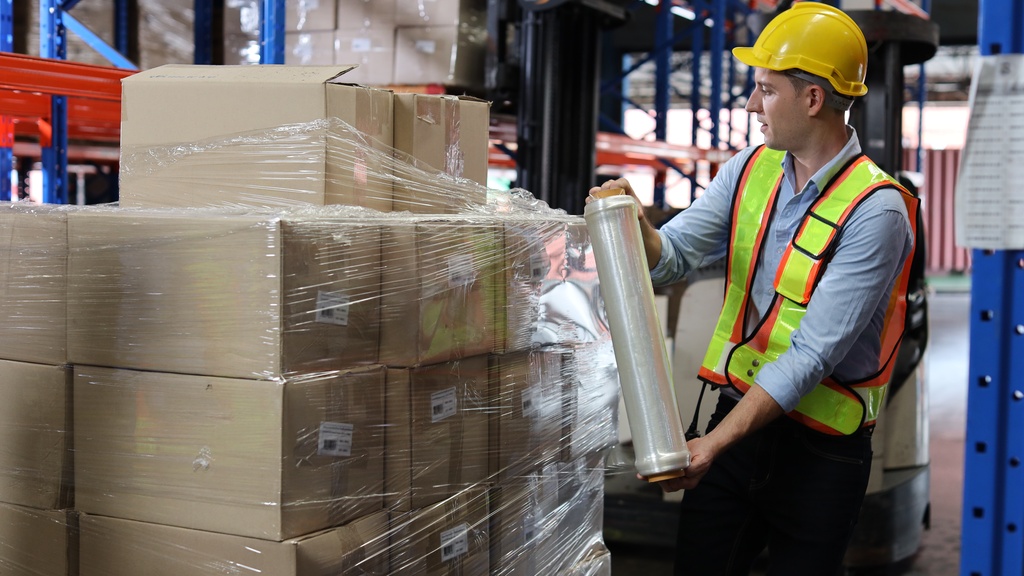
A pallet may look ready to ship, but what happens between the loading dock and the destination can put that packaging to the test.
Truck vibration can gradually shift cartons. Forklift movement can place sudden forces on a load. Changes in temperature, handling conditions, and road surfaces may add more stress during transit. When stretch film does not provide dependable containment, small movements can become larger problems before the shipment arrives.
For manufacturers, distributors, warehouses, and other businesses along the Mississippi Gulf Coast, consistent pallet wrapping matters for predictable shipping. The wrapping process helps the entire pallet behave as a stable unit throughout handling and transportation.
Pallet Wrapping Helps Keep Loads Stable
Stretch film creates containment force around a palletized load. That force helps hold individual packages against one another and reduces their ability to move independently.
This matters because even a neatly stacked pallet can become unstable once it leaves the warehouse floor. Acceleration, braking, turns, and vibration introduce forces that stationary freight never experiences. If cartons begin shifting inside the film, the pallet can lose its stable structure.
A dependable wrapping process helps limit that movement. The film should secure the load firmly enough to maintain its shape without applying more force than the products or packaging can tolerate.
That balance changes depending on the shipment. Cases of canned products can withstand different forces than lightweight cartons. Tall pallets behave differently from low, dense loads. Businesses that ship several types of products may need different wrapping settings for each configuration rather than one method for everything that leaves the dock.
Inconsistent Wrapping Creates Unpredictable Results
Problems can develop when workers wrap similar pallets differently from one another.
One employee might apply several layers of film near the pallet base, while another uses fewer. Film tension may change between loads. A worker may reinforce the top of one pallet but not the next.
Each difference changes how the load responds during transportation.
Manual wrapping can also make consistency harder to maintain during a busy shift. Fatigue, changes in walking speed, and differences in technique can affect how much film reaches each section of a pallet. Even experienced employees can produce variations when they must judge the entire process by sight and feel.
The Base and Top Need Proper Attention
Not every part of a pallet experiences the same demands.
The bottom portion plays an important role because it connects the load to the pallet itself. If the film does not create enough stability near the base, the stacked products may shift while the pallet remains beneath them. Adding appropriate reinforcement in this area can help keep the load and pallet working together during movement.
The top can present a different challenge. Upper cartons may have less weight pressing down on them, which can make them more susceptible to shifting. Depending on the load design, extra wraps near the top may provide useful reinforcement.
Applying identical amounts of film everywhere does not necessarily solve either problem. A better approach considers where the load needs support and adjusts the wrapping pattern accordingly.
Wrapping Settings Should Match the Load
Facilities that use semi-automatic equipment can control several parts of the wrapping cycle instead of relying entirely on operator judgment.
For example, operators can define how many revolutions the machine applies near the top and bottom of the pallet. They can also adjust film force to suit products with different levels of rigidity.
Targeted reinforcement can help when one section of a load requires additional support. A facility may strengthen that area without simply adding more film to the entire pallet. Wrap pattern control in semi-automatic stretch wrap systems can shape a repeatable wrapping process.
The important point is not that every pallet should receive more film. Instead, facilities should apply film where it contributes to reliable containment.
More Film Does Not Automatically Mean Better Protection
Consistent pallet wrapping matters for shipping because more film does not guarantee more protection. Adding stretch film can appear to be the simplest answer, but extra material cannot correct every packaging problem.
Poor stacking can leave gaps in a load. Damaged cartons may collapse under pressure. An unsuitable pallet can create an unstable foundation. Excessive film force may even deform certain packages.
A sound wrapping process starts with the complete load. Workers should examine the pallet condition, stacking pattern, packaging strength, and expected transportation demands before deciding how the stretch film should perform.
From there, the wrapping method can provide the necessary containment without using material simply as a substitute for better load preparation.
Repeatability Matters Across Shifts
A shipping operation may run smoothly during one shift and experience problems during another if the process depends too heavily on individual technique.
Written procedures can reduce that variation. They can specify how workers should prepare the pallet, which wrapping pattern corresponds to a particular load, and what employees should inspect before releasing freight.
Equipment presets can add another layer of consistency when facilities repeatedly ship the same products. Once the operation establishes suitable settings for a recurring load, operators can use the corresponding configuration rather than rebuilding the wrapping process each time.
Presets still require attention. If carton dimensions, pallet patterns, or product characteristics change, the previous settings may no longer provide the same results. Employees should treat set configurations as starting points, not permanent answers for every version of a product.
Inspection Should Be Part of the Process
Wrapping ends when the film cycle stops, but quality control should continue.
Employees can visually check whether the film covers the intended sections of the pallet and whether the load remains square. They can look for torn film, loose areas, damaged cartons, or products extending beyond the pallet footprint.
Frequent shipping problems deserve closer review. If the same type of load arrives with shifted cartons or damaged packaging, the facility can examine its stacking and wrapping procedures rather than treating each incident as unique.
That review may reveal that certain loads need additional reinforcement. In other cases, the operation may discover that excessive force or poor pallet construction contributes to the problem.
Local Businesses Benefit From Reliable Shipping Practices
Businesses along the Mississippi Gulf Coast move products through a transportation network that extends well beyond the region. Freight may pass through several warehouses, terminals, trucks, and distribution centers before reaching its destination.
The shipper cannot control every condition along that route. It can control how well the pallet leaves the facility.
That makes pallet wrapping consistency an important part of shipping preparation. A repeatable process can help maintain load stability, reduce avoidable movement, and give workers a clearer standard for evaluating pallets before they enter transportation.
Reliable shipping begins long before a truck reaches the highway. It starts on the warehouse floor, where careful load construction and a well-matched wrapping process prepare freight for everything that comes next.