How Long Beach became known as the “Radish Capital of the World”
By Katelyn Petty
Did you know that Long Beach, Mississippi was once known as the radish capital of the world? Today, Long Beach is known as the Friendly City, because tourism is the main economic driver.
Originally, Long Beach was named Rosalie, which was the name of a house that coast pioneer John J. McCaughan built on an area of land called Bear Point. Bear Point was shared with Nicholas and Marianne Ladner and is now where the University of Southern Mississippi sits.
McCaughan’s house, Rosalie, was a central location for locals nearby to use as a place to drop off mail and gather supplies. By 1865, Bear Point was renamed Rosalie Village.
By the early 1900s, many people came to Long Beach, a popular place for truck – crop farming and where people had the convenience of using the L&N Railroad for shipping vegetables. In the early 20th century, after the logging industry cleared out most pine tree forests in the area, the agricultural industry started to change. Farmers grew many different types of vegetables; however, growing radishes became increasingly popular.
A type of radish called Long Reds, or the Long Red Radish, which was eventually called the Long Beach Red or the Long Beach Red Radish, was planted and then shipped by train to taverns in the country’s north and mid-west areas, where radishes were in great demand.
The radishes were commonly served in taverns sliced, dipped in butter, and salted as a popular snack. Impressive numbers of Long Beach Radishes were shipped across the country in as many as three hundred railroad boxcars a year. It was then that Long Beach became known as the “Radish Capital of the World.” The Long Beach Radishes were so long, they were described as looking like carrots, three to four inches long, and tasting very tart.
By the 1920s, when prohibition was passed, popularity of the Long Beach Radish faded, because transportation costs came down, allowing other production areas to become more feasible. The development of the smaller, round, and sweeter radish called the Button Radish took over in popularity, because they grew faster than the Long Beach Red.
Today, the Button Radish is typically preferred and is often used in stews, soups and many other dishes. Although the popularity of the Long Beach Radish faded by the 1920s, people in the 21st century continued celebrating the history of the Long Beach Radish by hosting a festival on the Long Beach Town Green sponsored by Real Foods Gulf Coast, the Long Beach Farmers Market and the City of Long Beach. Not only did the festival celebrate the history of local radishes, the festival also celebrated the town’s history as a truck-farming town.
In 2022, Long Beach welcomed a new restaurant called “Radish” to the heart of downtown. The restaurant celebrates the history and agricultural spirit of the Gulf Coast connecting with the vegetable that put Long Beach, Mississippi, on the map.
The chefs at Radish embrace time-honored techniques, along with traditions, in order to create a menu using ingredients showcasing Southern food.
This year, Mary Kephart and her daughter Skylar, both Long Beach residents, wanted to write a children’s book to teach about the history of Long Beach. Mary says she specifically wanted to teach local children that even small towns like Long Beach can have a large impact on a national level.
The idea for a book sparked when Skylar wrote a paper for an English class at the University of Southern Mississippi on the history of Long Beach’s library. Mary and Skylar both agreed it would be great to bring Long Beach’s history to the younger generation in a children’s book. Before writing the first book, Skylar decided to make it into a four-part series, with the first book being called Rosey Radish.
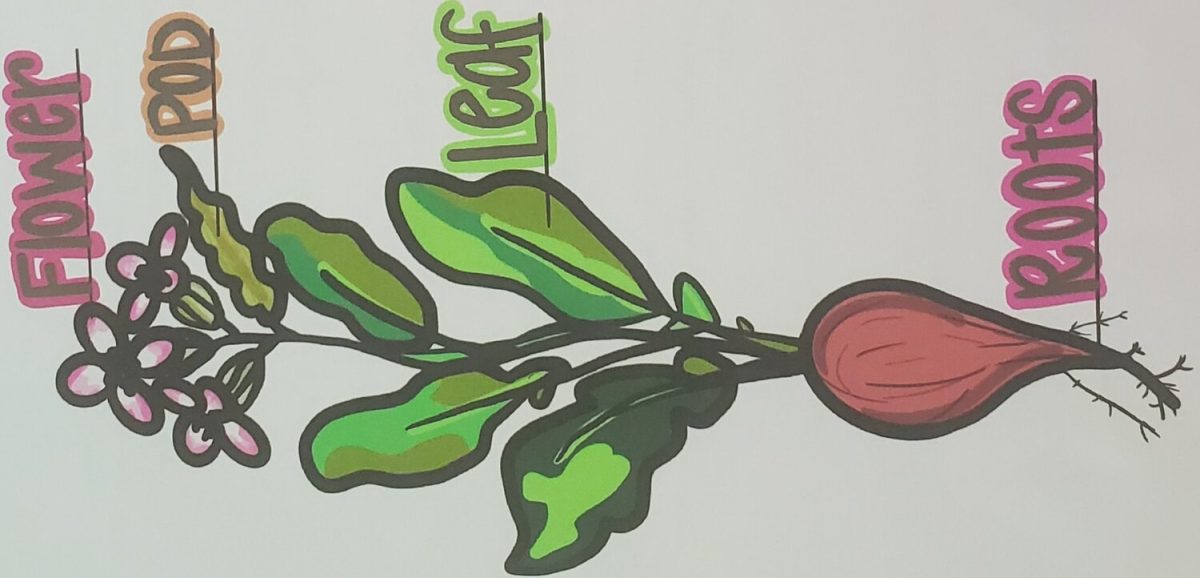
Rosey Radish explains the history of how Long Beach became known as the Radish Capital of the World. The series will follow Rosey as she travels and meets other famous fruits and vegetables, learning their history along the way.
“We are hoping with each release that the series will bring historical information to our young readers,” said Mary. “While writing the Rosey Radish series, we learned a lot of history in other places and what those places are commonly known for.”
For example, St. Bernard Parish, just south of New Orleans, Louisiana, is known for the Creole tomato, Georgia honors the history of their state fruit, the peach, and Idaho has a state vegetable, the potato.
The next book coming out in the series is Theo the Creole Tomato, expected by the end of the summer.
Mary said the character Rosey inspired her to continue writing books for the series saying, “I will probably always have a fondness for Rosey and the first book, Rosey Radish.”